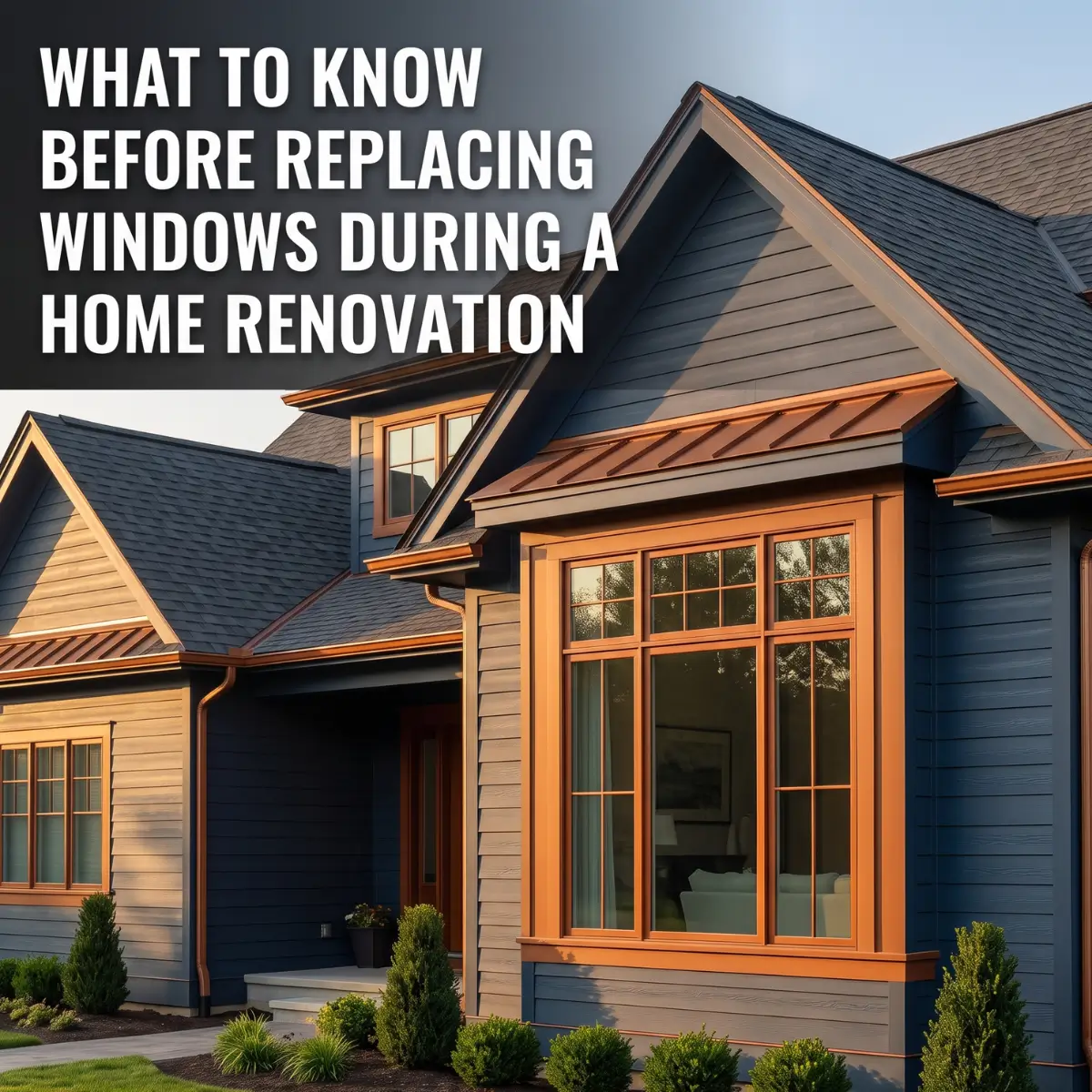
Planning a major home renovation requires careful technical preparation. Homeowners must understand what to know before replacing windows during a home renovation to protect structural framing.
Why Timing Matters When Replacing Windows During a Home Renovation
Timing dictates the overall success of your exterior upgrade project. Replacing window units before finishing interior drywall prevents costly structural disruptions. Old window openings often conceal hidden framing rot and water damage.
Exterior wall cavities experience severe environmental stress in Virginia. Rapid temperature swings cause material expansion and contraction. Installing new window units early ensures proper integration with water-resistive barriers.
High humidity levels in Stafford and Spotsylvania accelerate wood frame decay. USGS explains how water easily migrates into unsealed rough openings through capillary action. Surface tension draws standing water into microscopic gaps between framing timber and flashing.
You must sequence construction trades carefully during full-home projects. Installing exterior siding before windows creates severe flashing alignment problems. Early window installation guarantees a tight weather-resistant building envelope.
Correct trade sequencing prevents interior dust from damaging new glass coatings. Rough openings remain exposed during framing alterations. Completing window installation early protects your interior subflooring from sudden rainfall.
Structural Physics and Replacing Windows During a Home Renovation
Windows fail when physical forces compromise the perimeter weather seal. Wind-driven rain exerts heavy hydrostatic pressure against window sills during summer storms. This liquid pressure forces water inward through microscopic sealant line defects.
| Physical Force | Physical Mechanism | Structural Impact |
| Capillary Action | Surface tension pulls water into tiny gaps | Hidden sill pan decay and wall framing rot |
| Hydrostatic Pressure | Standing water forces liquid through joint gaps | Direct water leaks behind exterior siding |
| Thermal Expansion | Temperature swings move materials at different rates | Cracks in rigid exterior perimeter sealants |
| UV Degradation | Solar rays break chemical bonds in polymers | Brittle caulking and frame material breakdown |
Thermal expansion presents another constant technical challenge for homeowners. Vinyl, aluminum, and wood expand at drastically different rates. A vinyl window frame expands significantly faster than surrounding structural wood studs. Rigid caulking cracks when exposed to these differential material movements.
Solar energy creates long-term material breakdown on exposed elevation faces. Continuous UV degradation breaks down low-grade caulking compounds. Solar ultraviolet radiation turns flexible polyurethane sealant brittle over time. Water eventually penetrates these microscopic fractures during severe local rainstorms.
Proper sill pan installation prevents these physical wall failures. Sloped sill pans collect penetrating water and direct it outward. Integrated flexible flashing prevents moisture from reaching structural wall framing studs.
Continuous air sealing eliminates vapor migration into wall cavities. Moisture-laden indoor air moves into cold outer framing spaces. Condensation forms when warm vapor hits cold exterior sheathing boards.
Material Performance Differences Across Virginia Climates
Selecting correct glass options impacts long-term home energy efficiency. Virginia climate conditions demand low solar heat gain ratings. High summer temperatures create massive solar heat loads on southern glass exposures.
Double-pane insulated glass units utilize dense argon gas fills. Argon gas reduces conductive heat transfer between glass panes. Low-emissivity coatings reflect radiant infrared heat back toward its source.
| Window Feature | Technical Function | Homeowner Benefit |
| Argon Gas Fill | Lowers thermal conductivity between glass panes | Reduces HVAC energy consumption year-round |
| Low-E Coatings | Reflects infrared and ultraviolet light spectrums | Prevents interior flooring and furniture fading |
| Multi-Chamber Vinyl | Traps air inside internal frame chambers | Increases frame structural rigidity and thermal resistance |
Our technical team installs high-performance custom windows & doors built specifically for local climate demands. Proper frame design prevents structural frame warping and seasonal draft creation.
Financial planning remains a critical step for major residential upgrades. Flexible payment structures make complete multi-window replacements achievable without project delays. Homeowners can explore financing options to upgrade their entire building envelope at once.
Proper material selection extends frame operational life by decades. High-grade vinyl compounds resist thermal distortion under direct sunlight exposure. Insulated composite frames offer exceptional structural rigidity across shifting seasons.
Avoiding Common Pitfalls When Replacing Windows During a Home Renovation
Incorrect flashing installation remains the leading cause of window failure. Installers must shingle flashing membranes properly from bottom to top. Reverse flashing laps trap water directly inside the building wall cavity.
Key Technical Rule: Flashing membranes must always lap over the lower element. Never create a reverse lap that directs water behind the weather barrier.
Homeowners in Stafford County frequently experience high wind loads during storm seasons. Local homeowners can review our specialized services in the Stafford location service area to protect their property. Proper installation withstands wind-driven rain and local atmospheric pressure fluctuations.
Working with an experienced exterior contractor prevents critical installation errors. We maintain rigorous craftsmanship standards on every residential project. Learn more about our professional process and installation standards by visiting why us.
Improper expansion gaps around frames cause operational bind. Vinyl window frames expand during hot summer months. Installers must leave precise gaps for non-expanding low-pressure foam insulation. Heavy expanding foam warps window jambs and causes sash sticking.
The Takeaway on Replacing Windows During a Home Renovation
Replacing windows during a home renovation preserves your property value and structural integrity. Understanding capillary action, hydrostatic pressure, and thermal movement ensures lasting building protection. Proper flashing details keep destructive water outside your living spaces.
Never delay window replacement during major structural renovation work. Professional installation delivers immediate energy savings and draft protection.
Ready to protect your investment? Schedule a Windows & Doors Consultation with our technical team today.