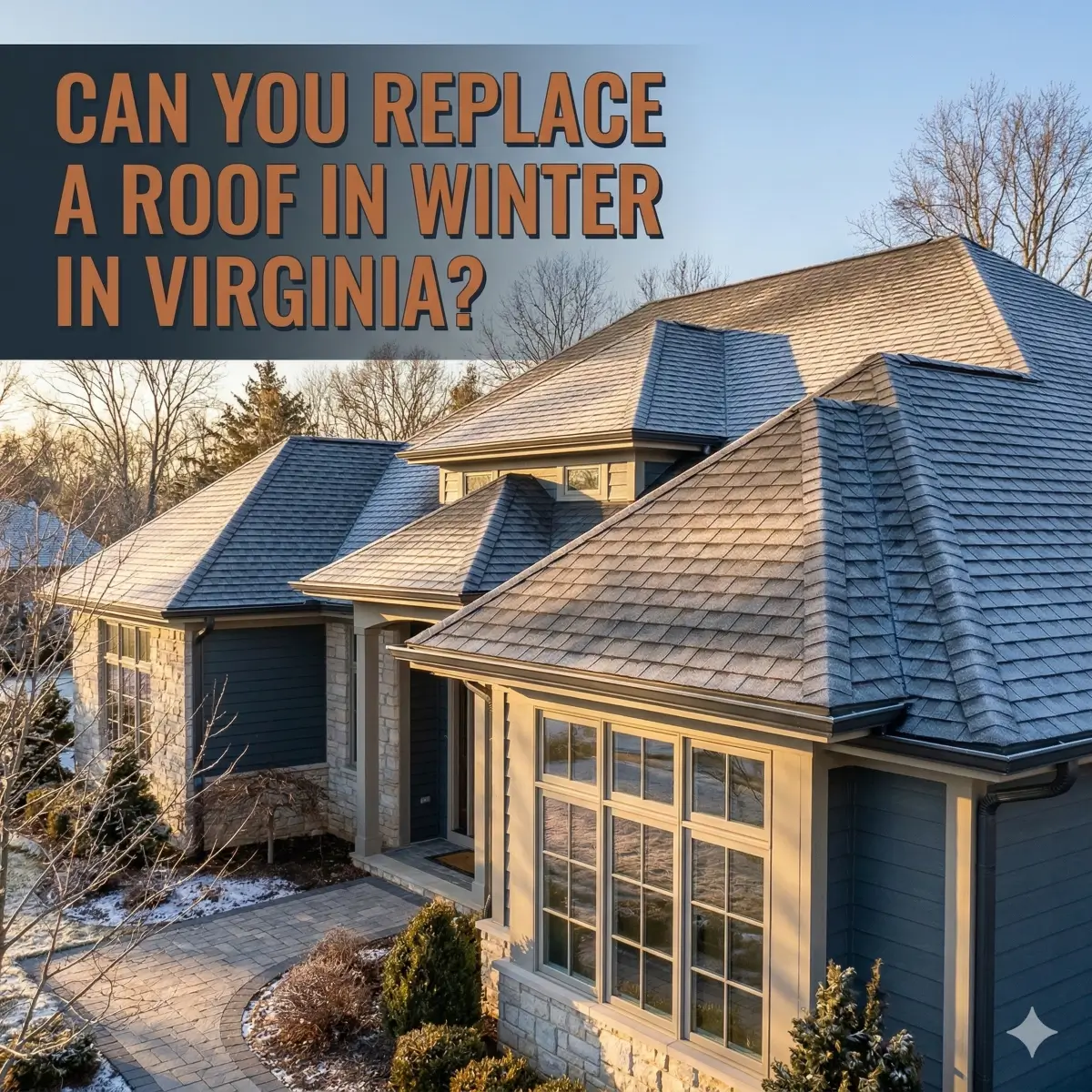
Many homeowners in Stafford and Spotsylvania worry that a winter roof replacement is impossible. They often fear that freezing temperatures will compromise the integrity of their new system. The short answer is yes. You can absolutely replace a roof in winter in Virginia. However, success depends entirely on technical precision and specialized handling of materials.
Asphalt shingles are thermoplastic materials, meaning their physical properties change based on the ambient temperature. When the mercury drops below 40°F, the bitumen in the shingles begins to harden, making the material brittle and less pliable. According to technical guides from GAF, shingles should ideally be installed at temperatures above 40°F to ensure they do not crack during handling. If a contractor nails through a frozen shingle, the material can shatter around the fastener, creating a weak point that eventually leads to a leak material can shatter around the fastener, creating a weak point that eventually leads to a leak.
Why Technical Precision Matters in Winter
At FredXteriors, we focus on homeowners who value a professional, structured contractor experience over “cheap” or “bargain” fixes. Winter roofing requires specific technical steps to avoid failure:
- Hand-Sealing: We use asphalt plastic cement to bond shingles manually when the sun isn’t warm enough to activate the factory sealant.
- Brittle Material Care: We store materials in temperature-controlled environments to maintain flexibility until the moment of installation.
- Thermal Expansion Management: We ensure proper spacing to account for how materials will expand when Virginia temperatures rise in the spring.
Understanding Thermal Sealant Activation
The biggest challenge in winter is the shingle’s self-sealing strip. Modern shingles use a factory-applied adhesive. This adhesive requires solar heat to soften and bond to the shingle below it. This process is known as thermal sealant activation. During a typical Virginia winter, the roof surface may not reach the 70°F required to trigger this bond.
If the sealant does not activate, the roof is vulnerable to wind uplift. High winter winds can catch the edges of unsealed shingles. This can pull the fasteners through the matting. To prevent this, professional crews must use a technique called hand-sealing. We apply specific dabs of asphalt plastic cement to each shingle. This provides an immediate mechanical bond. It secures the roof until the warmer spring sun can permanently activate the factory sealant. This level of detail is why a professional process matters for your Residential Roof Replacement.
The Physics of Winter Roofing Challenges
Winter installations also face the threat of “cold curling.” When cold shingles are installed, they may not lay perfectly flat against the roof deck. If they are nailed in this state, they can remain slightly distorted. This prevents the shingle from shedding water properly. Water can then move upward through capillary action. This is the phenomenon where liquid flows into narrow spaces without the assistance of gravity.
Ice dams are another major concern for Virginia homes in King George and Caroline County. An ice dam occurs when heat escapes from your attic. This heat melts the snow on the upper parts of the roof. The water then runs down to the colder eaves and refreezes. This creates a dam that traps water. Hydrostatic pressure then forces that water under the shingles and into your home. A proper winter installation must include a high-quality leak barrier. This self-adhering membrane protects the most vulnerable areas of the roof deck.
Local Climate and Timing in Virginia
The weather in the Fredericksburg area is notoriously unpredictable. One week may be freezing. The next may see a “January thaw” with temperatures in the 50s. We monitor these shifts closely. We often schedule the actual installation for the warmest window of the day. This allows the materials to remain as flexible as possible.
Winter roofing actually offers some unique advantages. You do not have to wait for the spring rush. Most contractors have more immediate availability in the colder months. This allows you to address a failing roof before the heavy spring rains arrive. If you are concerned about the cost of an unexpected project, Financing options can make the investment more manageable. This ensures you do not have to delay a critical project until the weather warms up.
Why Experience Matters in the Cold
Not every crew is equipped for winter work. It requires slower, more deliberate movements. Workers must be cautious of frost or “black ice” on the roof deck. Air compressors for nail guns must also be monitored. Moisture in the air lines can freeze. This prevents the nailer from driving the fastener flush. A fastener that sits too high will prevent the shingle above it from sealing. A fastener driven too deep will cut right through the shingle mat.
We rely on our 20+ years of experience to navigate these technical hurdles. We store our materials in temperature-controlled environments until the moment they are needed. This keeps the shingles warm and pliable. We also prioritize clear communication. You will always know when we are coming and how the weather might affect your specific timeline. This is especially true for our neighbors at our King George Location, where winter winds can be particularly harsh near the water.
Takeaway: Protect Your Home Year-Round
A leaking roof does not wait for spring. Delaying a replacement often leads to much more expensive structural repairs. If your roof is showing signs of failure, winter is a perfectly viable time to act. You just need a team that understands the science of cold-weather materials.
Our team provides the documentation and structure you need to feel confident. We don’t play games with your protection. We provide clear, written plans for every winter project. We ensure your home is dried in and secured before any winter storm hits.
Schedule Your Roof Replacement Consultation today to review your options.