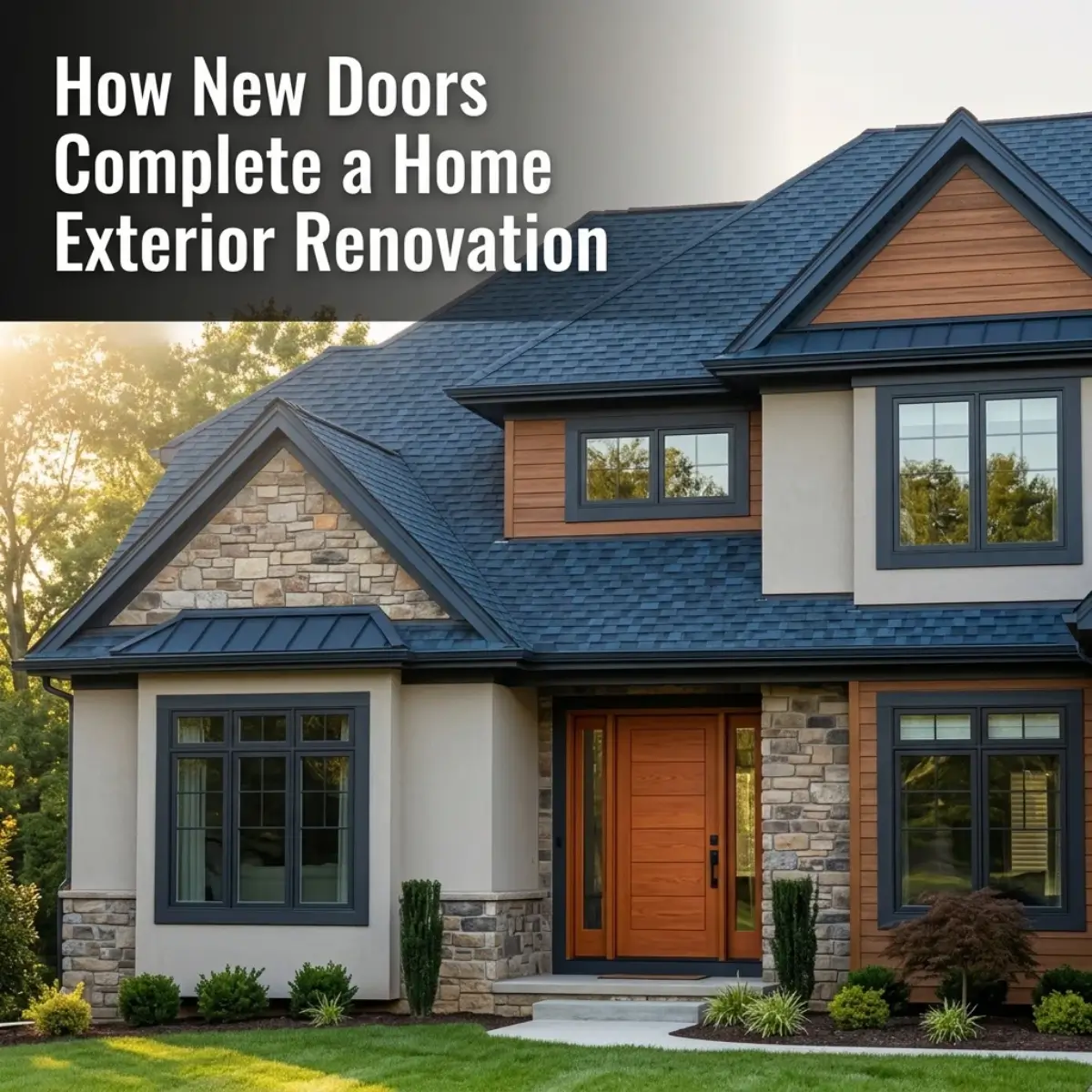
Homeowners often focus on new siding or a fresh roof while neglecting their entryways. Understanding how new doors complete a home exterior renovation helps protect your building envelope and elevate overall curb appeal. Older entryways degrade over time due to constant weather exposure. They create gaps in your building envelope. Cold drafts enter your living space during winter. Solar heat penetrates your home during summer. A thorough exterior overhaul requires equal focus on every access point.
Your entry doors work directly with your siding and roofing systems. When you install new siding, old door frames create weak points. Rain flows down exterior walls and seeks vulnerable gaps around unsealed trim. Old wooden frames absorb moisture and rot quietly behind the flashing. Installing high-performance entry doors seals this barrier completely. Modern door units utilize insulated cores and advanced weatherstripping. According to the 2021 Virginia Residential Code, proper flashing and air sealing around door openings direct water away from interior wall assemblies.
A new front door serves as the focal point of your exterior layout. It unifies your color choices, siding textures, and roof lines. Upgrading your entryways ensures that your home improvements look intentional and complete. Homeowners can upgrade their entry systems by exploring custom windows and doors designed for total climate protection. Proper installation stops air leaks while upgrading your curb appeal.
Stopping Energy Loss and Thermal Leaks
The primary job of an exterior door is energy retention. Old doors suffer from air infiltration. Air infiltration occurs when outdoor air leaks into your home through perimeter gaps. Pressure differences between indoor and outdoor spaces drive air through small cracks. You can see how new doors complete a home exterior renovation by eliminating these persistent drafts.
Thermal bridging also reduces efficiency in older door models. Thermal bridging happens when heat transfers directly through solid framing materials. Old solid wood or hollow metal doors lack thermal breaks. Heat travels quickly through these continuous materials. In winter, interior heat escapes to the outside air. In summer, solar heat radiates directly into your foyer.
Modern doors prevent thermal bridging through composite construction. Polyurethane foam cores provide high insulation values. Magnetic weatherstripping seals the perimeter tight against draft pressure. Thermal breaks separate interior metal surfaces from exterior metal components.
Flexible payment options through our home improvement financing help turn complex exterior upgrades into manageable monthly payments. Investing in high-efficiency doors lowers your monthly utility costs year-round. Lower heating and cooling loads extend the lifespan of your HVAC system.
Preventing Water Intrusion and Structural Rot
Water damage is the most destructive threat to any residential building envelope. Water causes structural rot, mold growth, and interior drywall damage. Entryways are particularly vulnerable to moisture threats during severe storms. Homeowners quickly discover how new doors complete a home exterior renovation when heavy rain tests their building seals.
Hydrostatic pressure forces rainwater against your door thresholds. During heavy downpours, water accumulates quickly at the base of your door. High wind pressure pushes standing water uphill under bottom seals. Inferior thresholds fail under continuous hydrostatic pressure. Water then enters your subfloor framing.
Capillary action also draws water into hidden gaps around door frames. Capillary action is the physical force that draws liquid into tight spaces. Unsealed end grain on wooden jambs draws water upward like a sponge. Over time, capillary action rots the floor joists beneath your entryway.
New exterior doors feature engineered composite jambs and threshold pans. Integrated flashing systems direct wind-driven rain away from the subfloor. Threshold seals block water penetration even under severe storm winds. When paired with proper flashing, new entryways protect your foundation and subfloor.
Property owners trust our team because of our commitments outlined on our why us page. We use proven installation methods to safeguard your exterior against water entry.
Resisting Regional Virginia Weather Extremes
Virginia weather poses unique challenges for residential exterior materials. Homes in Stafford and Spotsylvania face wide temperature swings throughout the year. Freezing winter nights alternate with hot, humid summer days.
Thermal expansion and contraction strain building materials continuously. Heat causes wood and metal door components to expand. Cold temperatures cause those same materials to contract tightly. This constant motion destabilizes caulking joints around the door trim. Over time, sealants crack and pull away from the siding.
Solar radiation and UV degradation accelerate material breakdown. Intense sun exposure breaks down chemical bonds in wood finishes and paint. UV rays dry out vinyl weatherstripping, making it brittle and prone to cracking. Once weatherstripping loses flexibility, drafts enter the home.
Homeowners in coastal river regions like our King George location face high humidity and strong wind gusts. Moist air accelerates wood rot and metal corrosion. High wind loads push rain against door seams with great force.
Modern fiberglass entry doors resist thermal expansion better than traditional wood. Structural fiberglass does not absorb atmospheric moisture. It will not swell, warp, or rot during humid summers. UV-resistant topcoats preserve the exterior finish against harsh solar exposure. Matching your door materials to regional weather demands ensures long-term exterior durability.
Material Options and Installation Standards
Selecting the right door material determines how your home performs over decades. Homeowners must evaluate structural strength, maintenance needs, and insulation performance.
Fiberglass doors offer superior durability for Virginia homes. Manufacturers mold fiberglass with rich wood grain textures. The internal cavity contains high-density foam insulation. Fiberglass resists denting, rusting, and rot. It requires minimal surface maintenance while offering high energy ratings.
Steel entry doors provide maximum security and structural rigidity. Heavy-gauge steel shells protect against forced entry and severe wind debris. Thermal breaks prevent heat transfer between exterior and interior steel panels. Premium exterior primer coats protect steel against rust and moisture exposure.
Proper installation is just as critical as material selection. A poorly installed door fails even if the unit is high quality. Installers must set the unit plumb, level, and square. They apply continuous bead sealant under the sill pan. They install self-adhered flashing tape around jamb perimeter flanges. This multi-layered barrier stops water intrusion and air leakage permanently.
Final Takeaway on Home Exterior Upgrades
A complete exterior transformation requires harmony between your roof, siding, and entryways. Upgrading your siding without replacing worn doors leaves your home vulnerable to moisture damage and energy loss. Understanding how new doors complete a home exterior renovation ensures your entire building envelope stays protected. Modern entry systems protect your subfloor framing, stop air infiltration, and elevate home curb appeal.
Choosing energy-efficient doors backed by modern composite materials preserves your home investment for decades. Professional installation ensures tight thermal performance and long-term protection against harsh Virginia storms.
Are you ready to transform your entryways and finish your home exterior project? Schedule your windows and doors consultation with our expert team today. We deliver written scopes, transparent pricing, and professional installation for every exterior project.