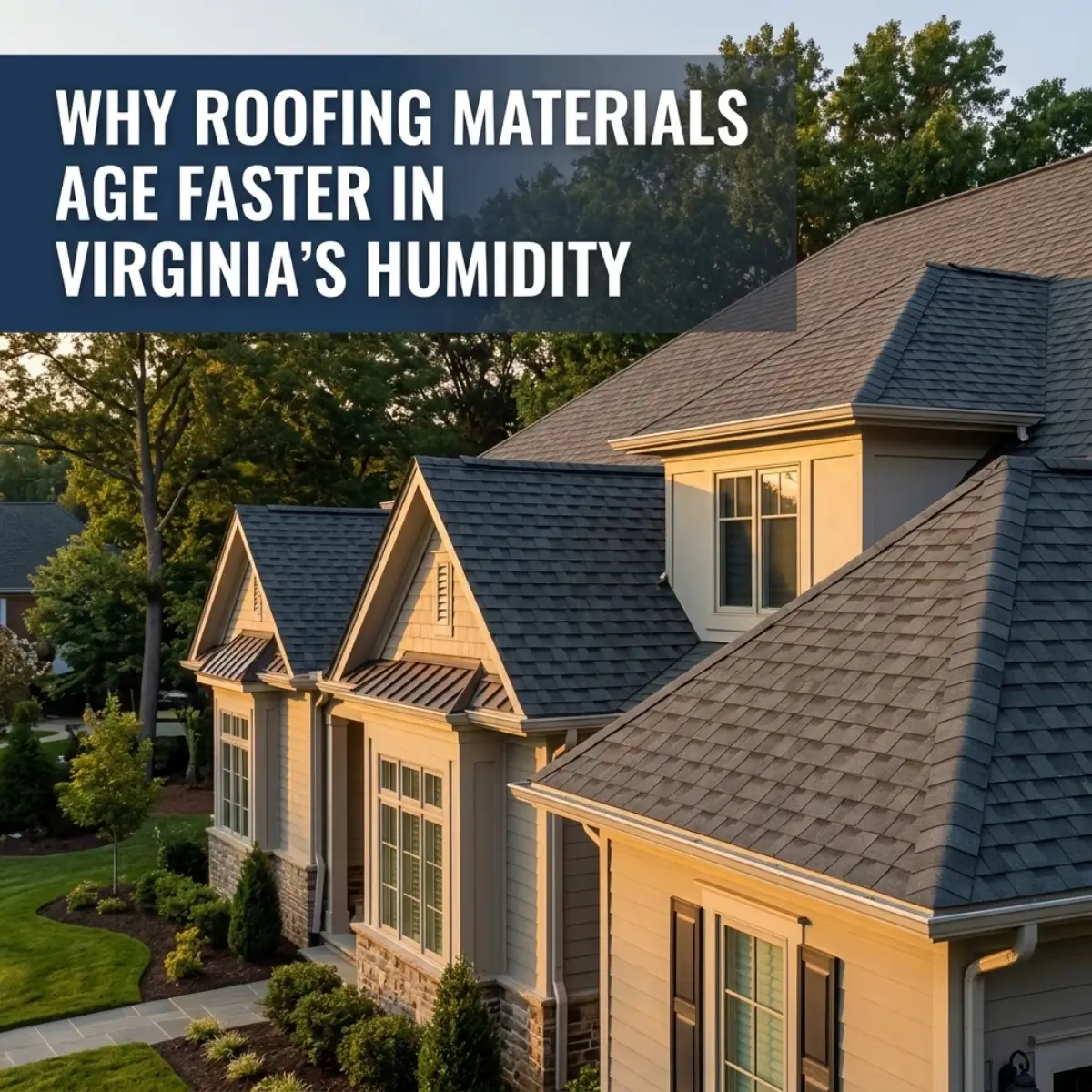
Understanding why roofing materials age faster in Virginia’s humidity helps homeowners protect their investment. High atmospheric moisture accelerates shingle decay across central Virginia. Summer weather creates dense humidity in the air. Water vapor traps excessive thermal energy near building structures. This environmental stress breaks down asphalt compounds rapidly.
Roofing systems must withstand extreme ambient vapor levels. High humidity forces roof decks to store excess moisture. Saturated air delays normal overnight cooling cycles. Asphalt shingles remain hot long past sunset. This constant heat exposure softens asphalt binders. Granules detach from the matting surface prematurely.
Proper attic ventilation remains critical for moisture control. According to GAF’s attic ventilation guide, balanced airflow prevents attic heat buildup. Trapped water vapor in attics cooks roofing materials from underneath. Homeowners need an engineered system to discharge warm, damp air. Professional contractors install intake and exhaust vents to maintain air circulation. Balanced ventilation reduces surface thermal stress.
Thermal Expansion and Moisture Trapping
Thermal expansion causes severe structural stress on asphalt shingles. Daily weather cycles create dramatic temperature shifts. Morning humidity keeps surfaces damp and cool. Midday sunlight rapidly heats dark shingle surfaces. Temperatures on the roof can reach 150 degrees Fahrenheit. The shingle material expands during peak afternoon heat.
Nightfall brings cooling temperatures and rising humidity. The expanding shingle contracts as temperatures drop. Continuous expansion and contraction cycles break internal bond fibers. Over time, micro-cracks form within the fiberglass core. Moisture penetrates these micro-cracks during high humidity events. Water vapor expands when temperatures rise again. This internal vapor pressure ruptures asphalt coatings from within.
Moisture trapping worsens this thermal cycle. High humidity prevents dew from evaporating quickly. Water stays trapped between overlapping shingle edges. Standard asphalt shingles rely on gravity to shed liquid water. Ambient water vapor bypasses surface tension. It penetrates underlayment layers during humid conditions. Trapped moisture softens wood decking below the shingle mat. Rotten decking loses structural integrity and nail-holding capability. Nails pull free from softened wood framing. Loose nails create entry points for water intrusion during heavy rainfall events.
Homeowners facing these challenges often choose a complete residential roof replacement. Installing a new roof system replaces damaged decking and underlayment. Modern synthetic underlayments resist moisture absorption better than traditional felt paper. High-performance underlayment creates an impermeable barrier against atmospheric vapor.
Hydrostatic Pressure and Capillary Action
Capillary action moves water into tiny spaces against gravity. High humidity creates standing moisture along shingle seams. Surface tension draws trapped water upward under shingle overlaps. Capillary force pulls water high up the roof slope. Liquid reaches unsealed nail heads and fastener penetrations. Moisture corrodes metal fasteners over time. Rusting nails expand in size. Nail expansion cracks surrounding asphalt material.
Hydrostatic pressure develops when water collects behind blocked pathways. High humidity keeps roof debris wet. Leaves and pine needles gather in roof valleys. Wet debris traps liquid against shingle edges. Trapped liquid exerts downward force on underlying materials. Water pushes through microscopic gaps in sealant strips.
Sealant strips lose adhesion under constant moisture exposure. Manufacturers design self-sealing strips to activate under solar heat. High humidity softens sealant adhesive prematurely. Damp air prevents full chemical cross-linking. Weakened sealant tabs lift during moderate wind events. Wind lifts loose shingle edges easily. Lifted shingles expose raw underlayment to direct rain. Moisture enters internal home structures quickly.
Proper installation practices stop capillary water movement. Expert installers apply continuous ice and water shields in vulnerable areas. Heavy-duty membranes seal tightly around fastener shanks. Engineered drip edges direct water away from fascia boards. High-quality flashing systems channel rain off roof slopes safely.
UV Degradation and Organic Growth
Ultraviolet radiation degrades asphalt shingles continuously. High atmospheric humidity magnifies UV impact. Water droplets act like small lenses on shingle surfaces. Concentrated solar rays break chemical bonds in asphalt polymers. Asphalt becomes brittle and loses elasticity.
Granule loss accelerates rapidly under combined UV and humidity exposure. Granules protect asphalt layers from solar radiation. Humidity weakens the adhesive holding granules to asphalt substrate. Rain showers wash loosened granules into gutter troughs. Bare asphalt exposes raw petroleum compounds directly to sun rays. Sunlight bakes exposed asphalt quickly. Cracking and curling appear across the roof surface.
High humidity creates ideal growing conditions for biological organisms. Algae spores settle on damp shingle surfaces. Gloeocapsa magma algae creates dark streak marks across roofs. These organisms feed on limestone filler in asphalt shingles. Algae colonies retain water against the shingle surface. Continuous moisture keeps shingles damp overnight.
Moss and lichen growth cause severe physical damage. The roots penetrate deep into shingle fibers. Moss acts like a damp sponge on your roof. It holds water directly against asphalt matting. Freezing temperatures turn trapped water into ice. Expanding ice lifts shingle edges forcibly. Lifted edges allow wind-driven rain under the roofing layer.
Choosing durable materials helps combat organic growth. Top manufacturers include copper granules to resist algae stains. Upgraded warranty options protect your long-term investment. Reviewing extended coverage details on our why us warranty page helps homeowners choose lasting protection.
Regional Climate Impacts in Stafford, Spotsylvania, and Caroline County
Virginia region climates present specific structural challenges. Stafford County experiences intense summer humidity due to proximity to waterways. Warm air from the Potomac River increases atmospheric moisture levels. Homes near water suffer accelerated organic growth and wood deck rot.
Spotsylvania County features rapid temperature fluctuations during seasonal changes. Direct sunlight warms roofs quickly after cool humid mornings. This sharp temperature shift increases thermal expansion stress. Shingles contract violently as evening humidity settles over local neighborhoods.
Caroline County homes face unique moisture retention risks. Rural acreage often includes dense tree coverage. Heavy shade prevents solar drying after rain events. Moisture stays trapped on shingle surfaces for extended periods. Homeowners in this area need specialized material selection. Exploring options for a Caroline County roof replacement ensures proper ventilation and algae resistance.
Local building codes address regional climate demands. Understanding why roofing materials age faster in Virginia’s humidity guides proper material choices. Roof structures must handle high wind uplift and heavy rain. Proper flashing installation protects eaves from wind-driven moisture. Experienced regional contractors understand local weather patterns. They select materials engineered for high humidity environments.
Takeaway: Protecting Your Virginia Home
Understanding why roofing materials age faster in Virginia’s humidity helps you make informed decisions. Atmospheric moisture causes thermal expansion, capillary action, and organic growth. Left unaddressed, trapped humidity destroys shingle integrity and rots wood decking. Protecting your home requires an engineered roofing system built for local conditions.
FredXteriors provides structured, professional solutions for Virginia homeowners. We deliver written documentation and clear pricing for every project. Our team uses advanced materials designed to withstand local humidity. Every project includes assigned project managers and scheduled timelines.
Do not let high humidity ruin your roofing investment. Protect your home with engineered materials and expert craftsmanship. Schedule a residential roof replacement consultation with our team today. We will help you select the right system for lasting protection.