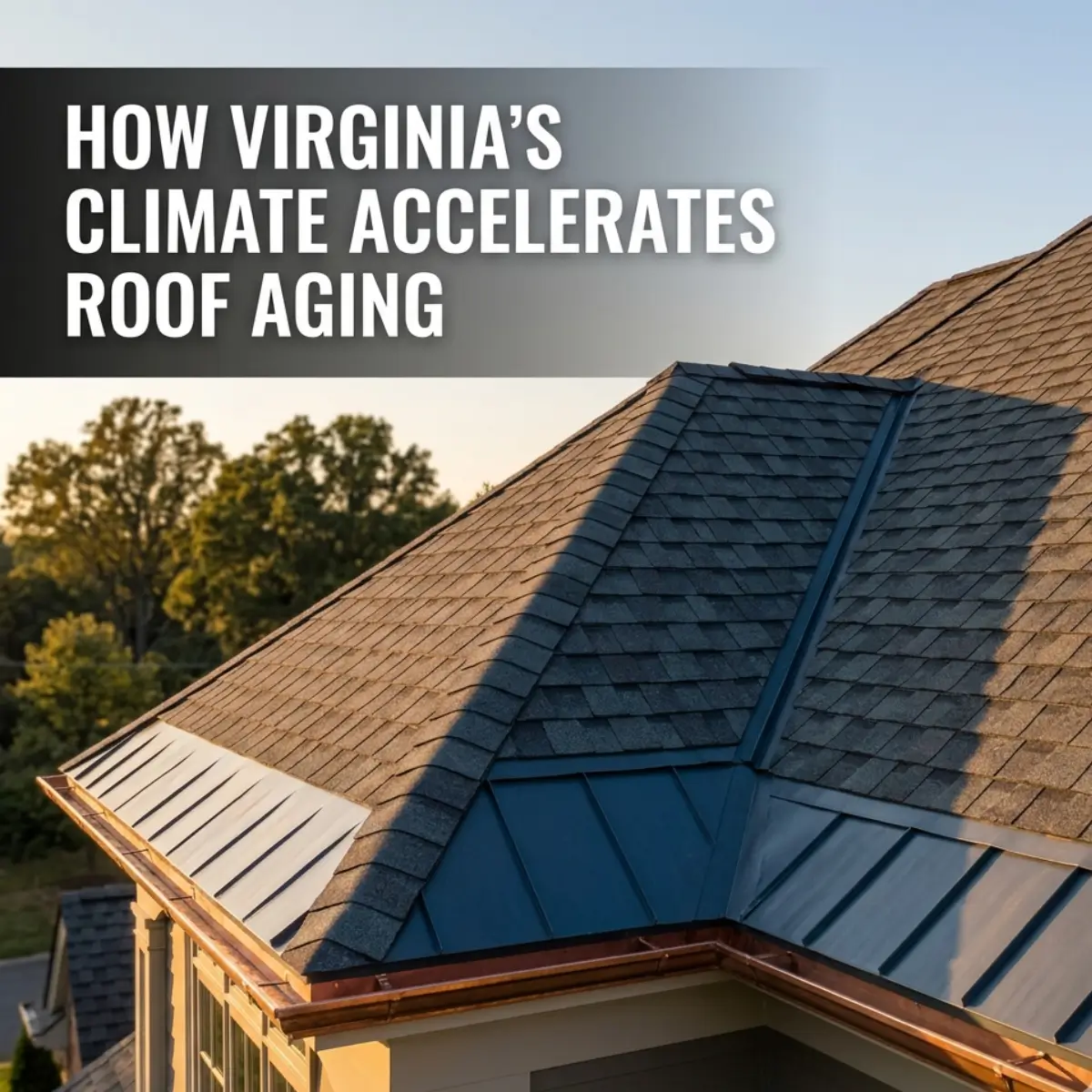
Virginia climate roof aging is faster and more aggressive than most homeowners realize. Beyond standard wear and tear, high summer temperatures can severely compromise a roof’s structural integrity. According to GAF’s industry insights on summer roof temperatures, a traditional dark asphalt shingle roof can reach temperatures up to 150°F on a sunny afternoon. This extreme heat triggers “thermal shock” which is a phenomenon where rapid temperature drops at night cause roofing materials to expand and contract aggressively. Over time, this constant shifting strains the shingles, breaks down UV-protective granules, and accelerates the overall aging process.
For homeowners in Fredericksburg and across the wider Virginia metro, that means the 30-year shingle on your home is more likely to function as a 22 to 25-year shingle in real terms. Therefore, understanding how Virginia climate roof aging actually works helps you plan replacement on your timeline, not on the timeline of an emergency leak.
How Heat Drives Virginia Climate Roof Aging
Virginia summers regularly push roof surface temperatures past 150°F on south-facing slopes during peak afternoon hours. At those temperatures, the asphalt binders that hold shingle granules in place soften, expand, and slowly migrate. Over hundreds of hot days across a decade, the cumulative effect is granule loss, brittleness, and curling at the edges.
In addition, heat accelerates the breakdown of underlayment material beneath the shingles. While the shingles take the visible damage, the underlayment is what prevents water from reaching the decking. Therefore, a roof that looks acceptable from the curb may already be compromised at the layer that does the real waterproofing work.
Freeze-Thaw Cycles, Storms, and UV Damage
Virginia winters are not extreme by national standards, but the freeze-thaw frequency is. The state averages 60 to 80 freeze-thaw cycles per winter in the Fredericksburg area, compared to a steadier 30 to 40 in deep-cold climates. As a result, water that finds any seam or nail penetration freezes, expands, and creates micro-fractures that compound across multiple winters.
On top of that, summer storm season brings hail, wind-driven rain, and occasional tropical storm remnants. Hail bruises shingles even when no impact damage is visible from the ground. Wind lifts shingle tabs that previously sealed flat, breaking the wind-rated seal that keeps water from penetrating during the next storm.
UV radiation is the quiet third factor. Virginia gets enough direct sun to fully degrade shingle UV inhibitors over 15 to 20 years, even on shaded slopes. Furthermore, UV damage compounds with heat damage. The two together explain why south and west-facing slopes nearly always fail before north and east-facing slopes on the same home.
When Virginia Climate Roof Aging Signals Replacement Over Repair
Several warning signs suggest the roof has crossed from “patchable” to “replace before next storm season.” Curling or cupping shingles, especially on south-facing slopes. Steady granule loss in gutters, not just one storm’s worth. Visible sagging on the ridge line. Water stains on interior ceilings, even faint ones. Daylight visible through the attic during the day.
Two or more of those, and a written assessment becomes the smart move. FredXteriors offers residential roof replacement with a process built specifically for Virginia conditions. Every project includes a free in-home consultation, a same-day written quote, multiple shingle and warranty options, a set install date, and an assigned project manager.
For example, a recent Fredericksburg homeowner replaced an 18-year-old roof that looked acceptable from the street but showed significant decking damage during the tear-off. Catching it before a leak avoided interior drywall and insulation repair that would have doubled the project cost.
Our extended warranty package includes both manufacturer and workmanship coverage, in writing, on every replacement.
FAQ
Most asphalt shingle roofs lose 5 to 7 years of actual life compared to the manufacturer’s rated lifespan, due to Virginia’s heat, humidity, and freeze-thaw cycles. A 30-year shingle typically functions as a 22 to 25-year roof.
South-facing slopes receive more direct sunlight, hit higher peak temperatures, and absorb more UV radiation. As a result, they typically show wear 3 to 5 years before north-facing slopes on the same home.
Yes, to a point. Annual gutter cleaning, prompt flashing repairs, proper attic ventilation, and tree-limb management all extend roof life. None of those reverse aging, however. They slow it.
Hail bruises and wind-broken seals are often invisible from the ground. A professional written assessment after major storm events catches damage that would otherwise go undetected until the next leak.
No. By the time a leak shows inside, water has been moving through the decking for weeks or months. Replacement before a leak avoids interior repair costs and gives you control over scheduling.
Takeaway
Virginia climate roof aging is real, predictable, and worth planning for. If your roof is approaching the 15 to 20 year mark, the smart move is a written assessment now, before storm season or a leak forces the timeline. Replacement on your terms is always cheaper than replacement under emergency pressure.
Schedule a free in-home consultation with FredXteriors. You will receive a same-day written quote with itemized scope, warranty options, install timeline, and financing terms. Premium service. Honest pricing. No surprises.