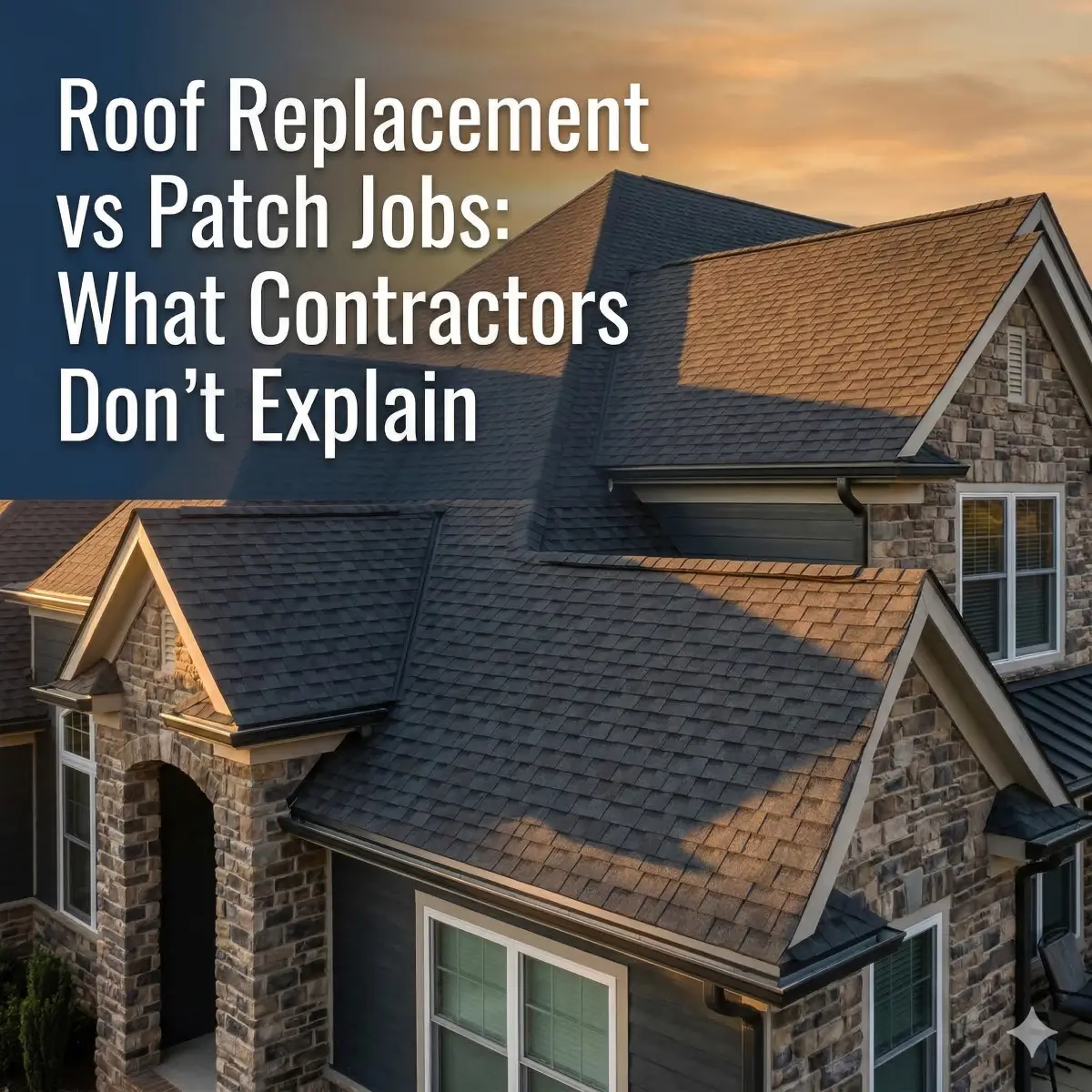
Roof leaks often trigger a choice between a quick fix and a permanent solution. Many homeowners in Stafford and Spotsylvania face this dilemma when they see water stains. Contractors often propose a patch to save money in the short term. However, the technical reality of roofing systems tells a different story. Understanding how components interact is vital for long-term protection.
The Physics of Roof Failure
A roof is not just a collection of shingles. It is a managed drainage system designed to shed bulk water. When a specific area fails, it is rarely an isolated event. Capillary action allows water to travel upward and sideways through tight gaps between materials. This physical phenomenon pulls moisture into narrow spaces where it can rot the wooden deck.
Hydrostatic pressure also plays a significant role in roof degradation. Water sitting on a flat or low-slope section exerts downward force. This pressure pushes moisture through microscopic cracks in aging shingles. A patch only covers the surface layer. It does not address the moisture already trapped in the underlayment.
The Virginia building code also influences the decision between a patch and a full system. According to the Virginia Uniform Statewide Building Code, a roof recover is not permitted if the existing roof is water-soaked. Recovering a damaged roof also violates code if the system has two or more existing layers. Patching over these issues often hides structural decay that leads to costly future repairs.
Why Patching Often Fails
Patching creates “islands” of new material on an old system. These materials have different thermal expansion rates. As the Virginia sun heats the roof, shingles expand. At night, they contract. New shingles move differently than brittle, 20-year-old shingles. This disparity often causes the seal around the patch to break within months.
Contractors who focus on patches may ignore the integrity of the flashing. Flashing is the metal defense at joints and chimneys. If the flashing fails, a shingle patch will not stop the leak. Proper integration requires a comprehensive approach. This is why many choose Residential Roof Replacement to ensure every component works together.
- Patches do not replace degraded underlayment.
- New shingles rarely match the color of weathered ones.
- UV degradation continues on the unpatched sections.
- Structural rot remains hidden beneath the surface.
The Hidden Costs of Repeated Repairs
Minor repairs seem affordable at first. A few hundred dollars may stop a drip today. However, older roofs typically develop new leaks shortly after a patch. This is known as the “patch cycle.” Homeowners in Caroline County often find that three or four repairs cost as much as a down payment on a new system.
Modern roofing systems offer Extended Warranty Protection that patches cannot provide. A patch typically carries no long-term guarantee. If the leak returns next season, you pay again. A full replacement provides a documented start date and a specific warranty. This documentation is essential for maintaining home value and insurance eligibility.
Strategic Planning for Your Home
Investing in a full system allows for better financial control. Flexible Financing options make replacement accessible without a large lump-sum payment. This moves the project from an emergency expense to a planned home improvement. It also prevents the sudden interior damage that follows a failed patch.
Visible aging is a primary trigger for action. If your shingles are curling or losing granules, a patch is a temporary bandage. Professional contractors look for systemic failure rather than surface defects. They check the attic for mold and the gutters for heavy shingle grit. These signs indicate that the entire system has reached the end of its life.
Takeaway for Virginia Homeowners
Choosing between a patch and a replacement requires a strategic view. A patch solves a symptom. A replacement solves the problem. Our team provides the clarity you need to make the right choice for your property. We focus on written documentation and professional structure to ensure you feel confident in your investment.
Schedule Your Roof Replacement Consultation to review your long-term protection options.